Submitted by xiaochonglinghu 140 Urban Socio-Semantic Segmentation with Vision-Language Reasoning alibaba-inc 130 3
Submitted by zhiyuanhucs 112 Rewarding the Rare: Uniqueness-Aware RL for Creative Problem Solving in LLMs Massachusetts Institute of Technology 4
Submitted by zhiyuanhucs 65 Collaborative Multi-Agent Test-Time Reinforcement Learning for Reasoning Massachusetts Institute of Technology 4
Submitted by Blue-Giant 37 Beyond Static Tools: Test-Time Tool Evolution for Scientific Reasoning shanghai ailab 35 2
Submitted by Kaichengalex 29 DanQing: An Up-to-Date Large-Scale Chinese Vision-Language Pre-training Dataset · 13 authors 12 3
Submitted by Ethical-Lens 28 Toward Ultra-Long-Horizon Agentic Science: Cognitive Accumulation for Machine Learning Engineering Shanghai Jiao Tong University 334 2
Submitted by zbhpku 25 CoF-T2I: Video Models as Pure Visual Reasoners for Text-to-Image Generation Kling Team 18 2
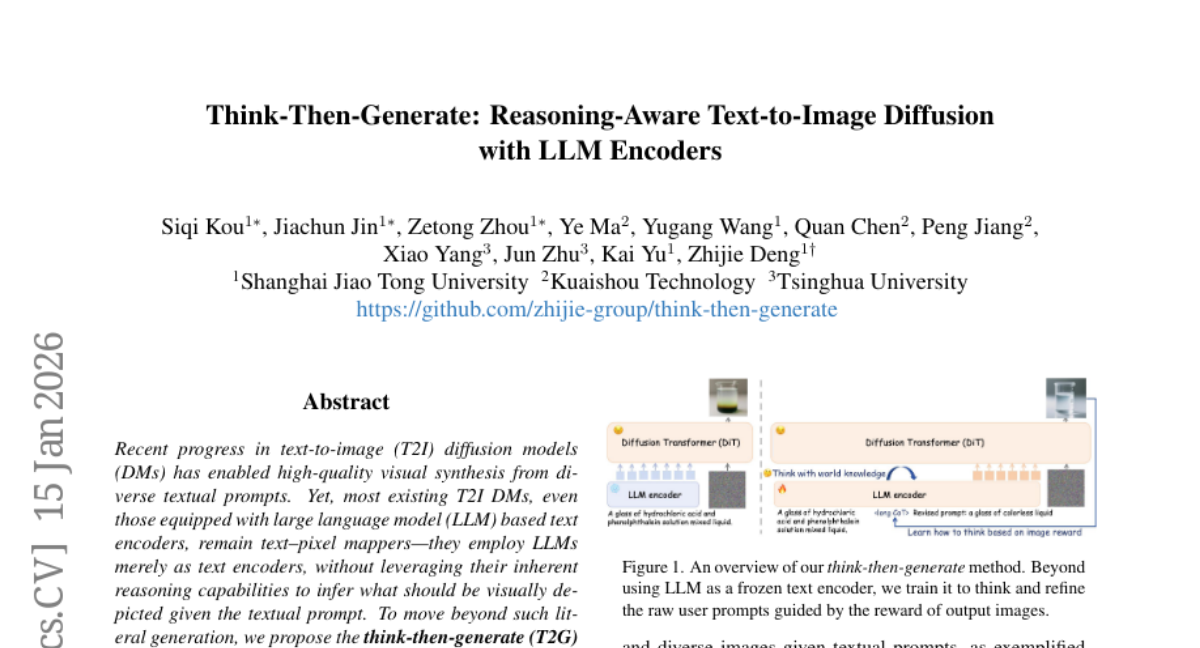
Submitted by karrykkk 21 Think-Then-Generate: Reasoning-Aware Text-to-Image Diffusion with LLM Encoders DENG Lab @ SJTU 37 3
Submitted by KID-22 18 MatchTIR: Fine-Grained Supervision for Tool-Integrated Reasoning via Bipartite Matching Renmin University of China 9 2
Submitted by adwardlee 18 ToolSafe: Enhancing Tool Invocation Safety of LLM-based agents via Proactive Step-level Guardrail and Feedback · 7 authors 2
Submitted by DobyXu 16 A Safety Report on GPT-5.2, Gemini 3 Pro, Qwen3-VL, Doubao 1.8, Grok 4.1 Fast, Nano Banana Pro, and Seedream 4.5 · 21 authors 20 2
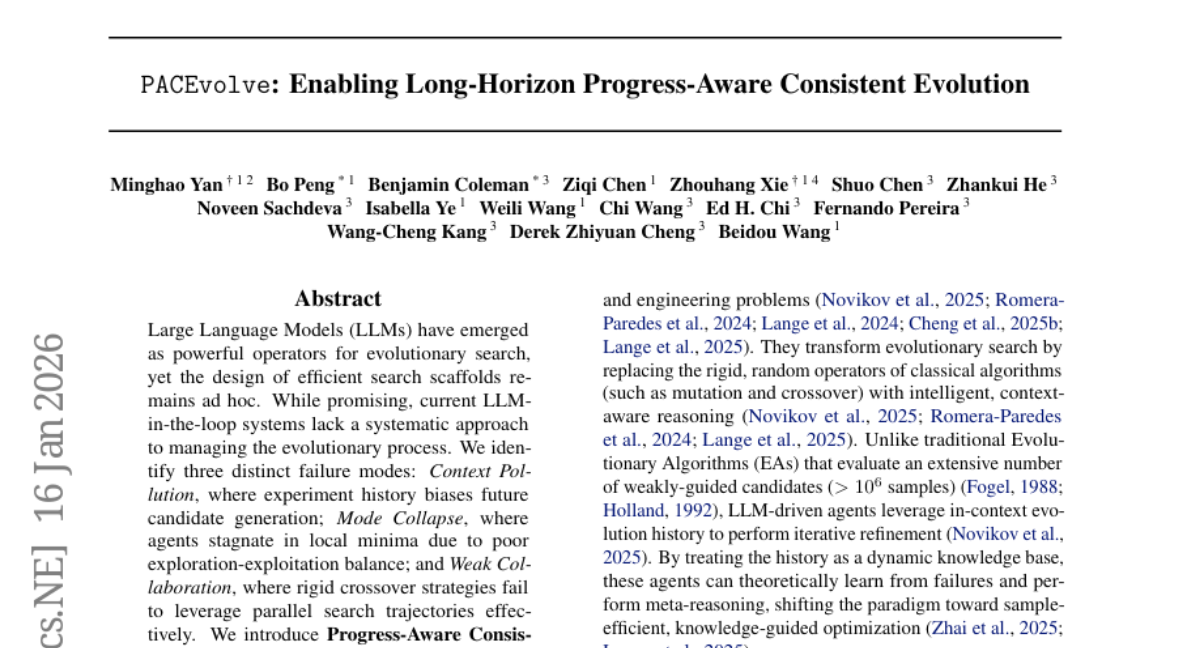
Submitted by minghaoyan 15 PACEvolve: Enabling Long-Horizon Progress-Aware Consistent Evolution Google 2
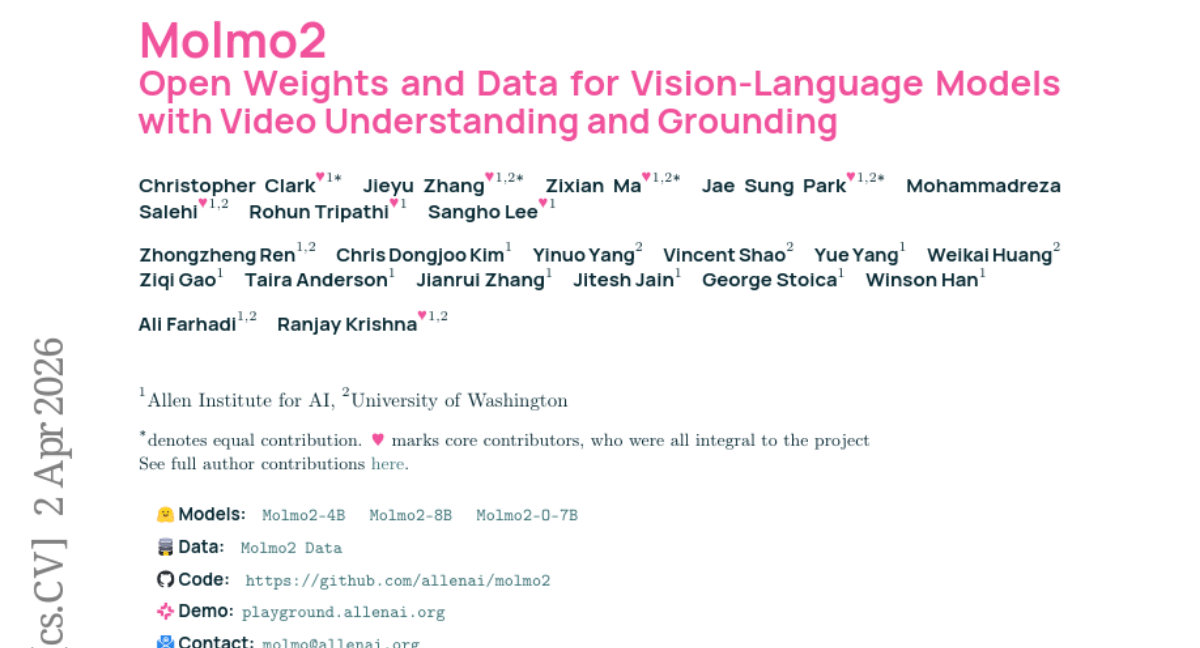
Submitted by taesiri 15 Molmo2: Open Weights and Data for Vision-Language Models with Video Understanding and Grounding · 21 authors 1
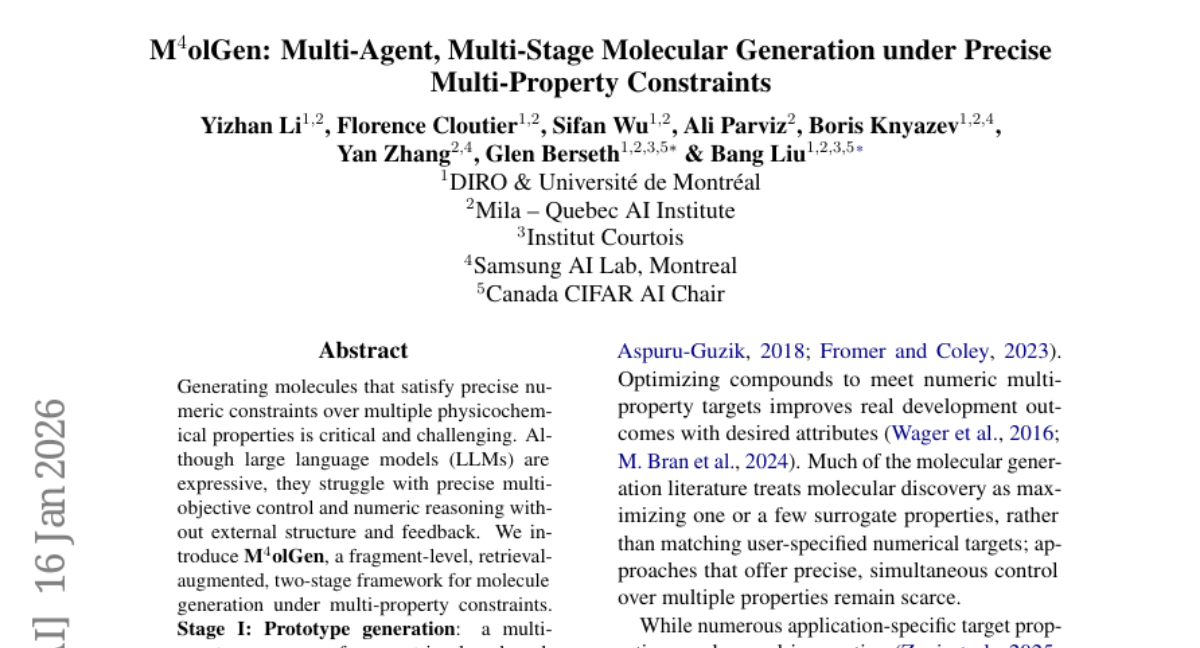
Submitted by Bang-UdeM-Mila 11 M^4olGen: Multi-Agent, Multi-Stage Molecular Generation under Precise Multi-Property Constraints University of Montreal 2
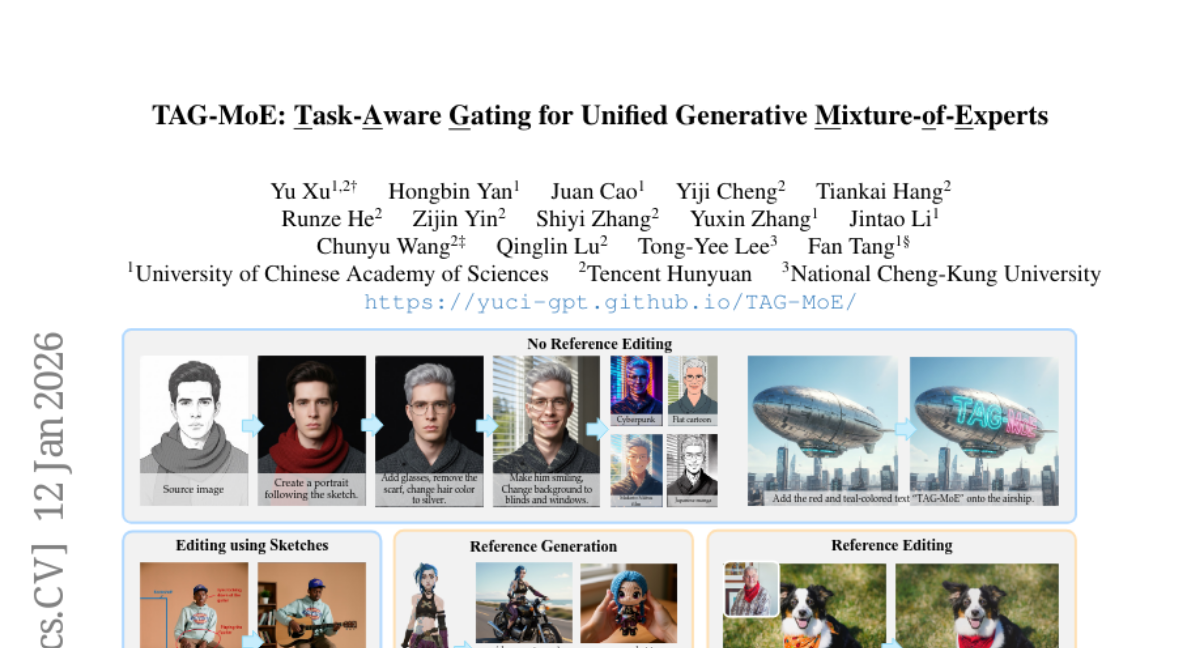
Submitted by Yana-Hangabina 8 TAG-MoE: Task-Aware Gating for Unified Generative Mixture-of-Experts · 14 authors 2
Submitted by taesiri 7 Inference-time Physics Alignment of Video Generative Models with Latent World Models AI at Meta 2
Submitted by FutureMa 7 EvasionBench: Detecting Evasive Answers in Financial Q&A via Multi-Model Consensus and LLM-as-Judge · 3 authors 3
Submitted by dd12345789 6 LSRIF: Logic-Structured Reinforcement Learning for Instruction Following Ant Group 2
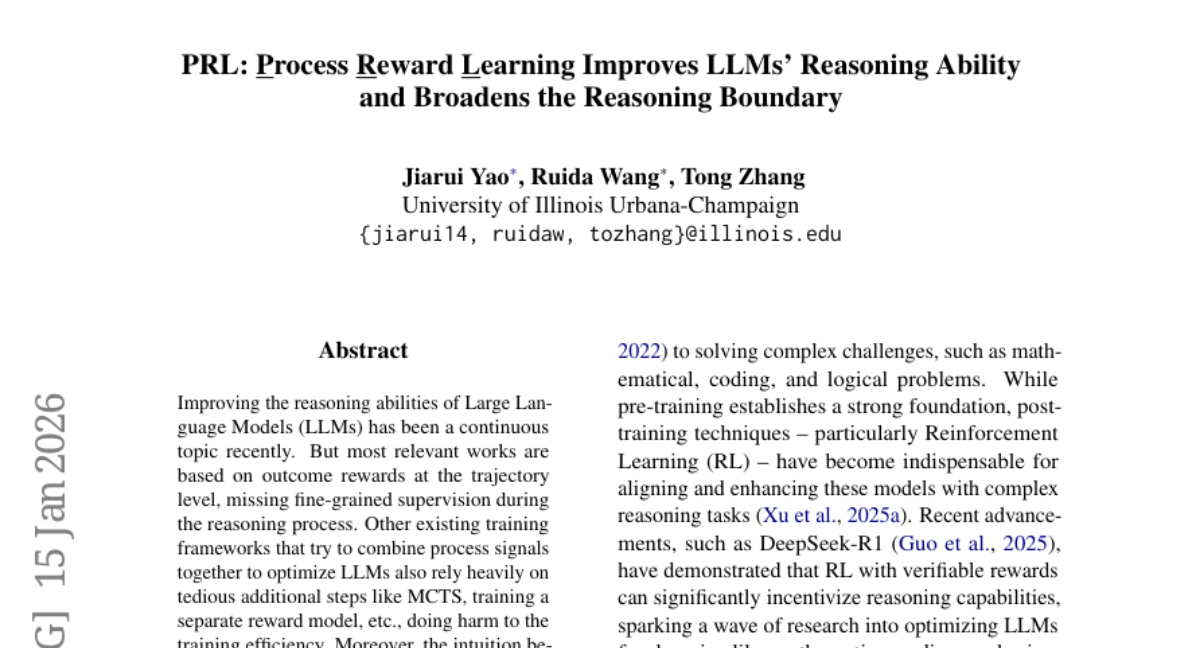
Submitted by FlippyDora 5 PRL: Process Reward Learning Improves LLMs' Reasoning Ability and Broadens the Reasoning Boundary · 3 authors 4 2
Submitted by Eurayka 5 LaViT: Aligning Latent Visual Thoughts for Multi-modal Reasoning · 9 authors 2
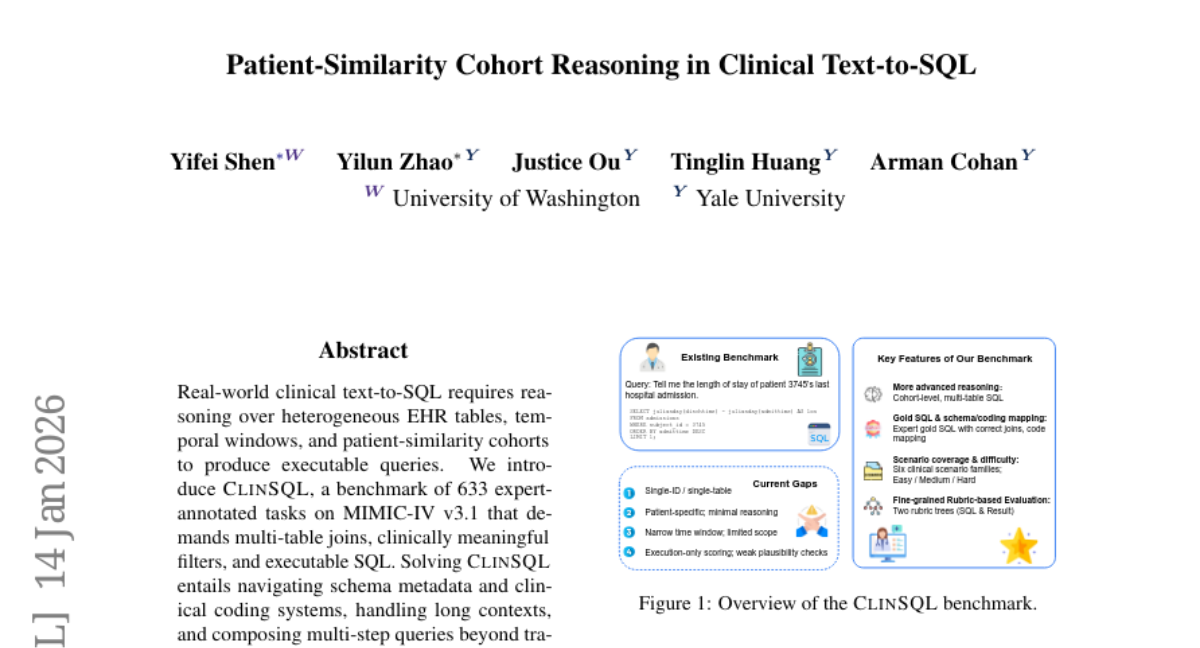
Submitted by yifeis02 4 Patient-Similarity Cohort Reasoning in Clinical Text-to-SQL University of Washington 1 2
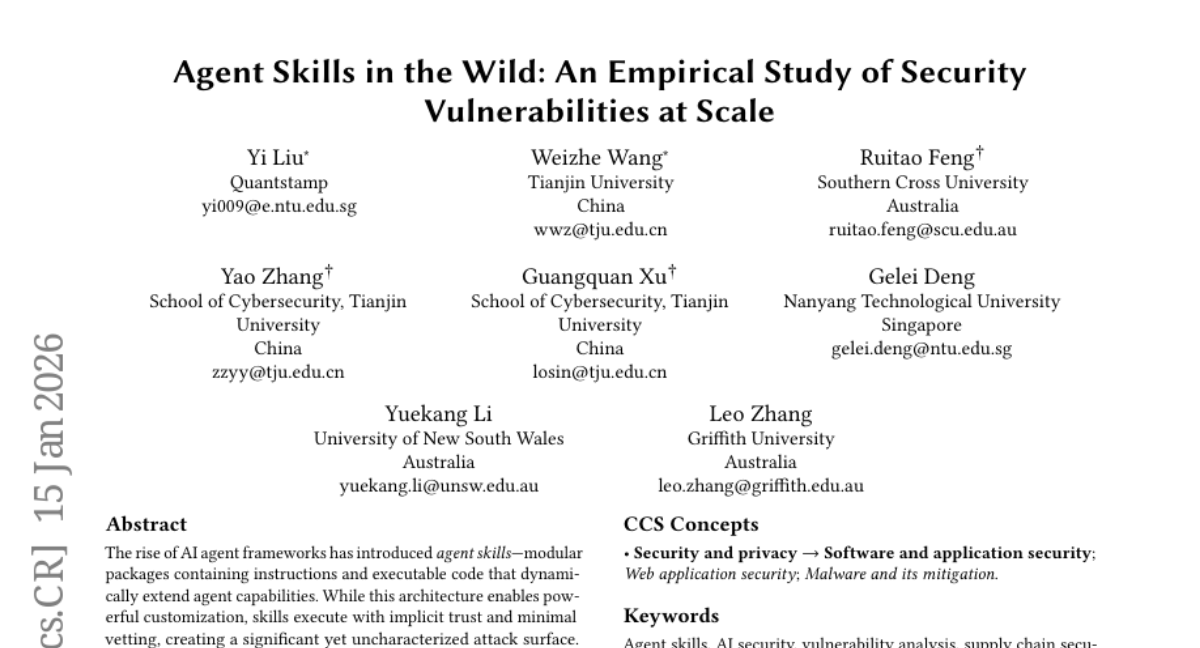
Submitted by sumleo 3 Agent Skills in the Wild: An Empirical Study of Security Vulnerabilities at Scale · 8 authors 2
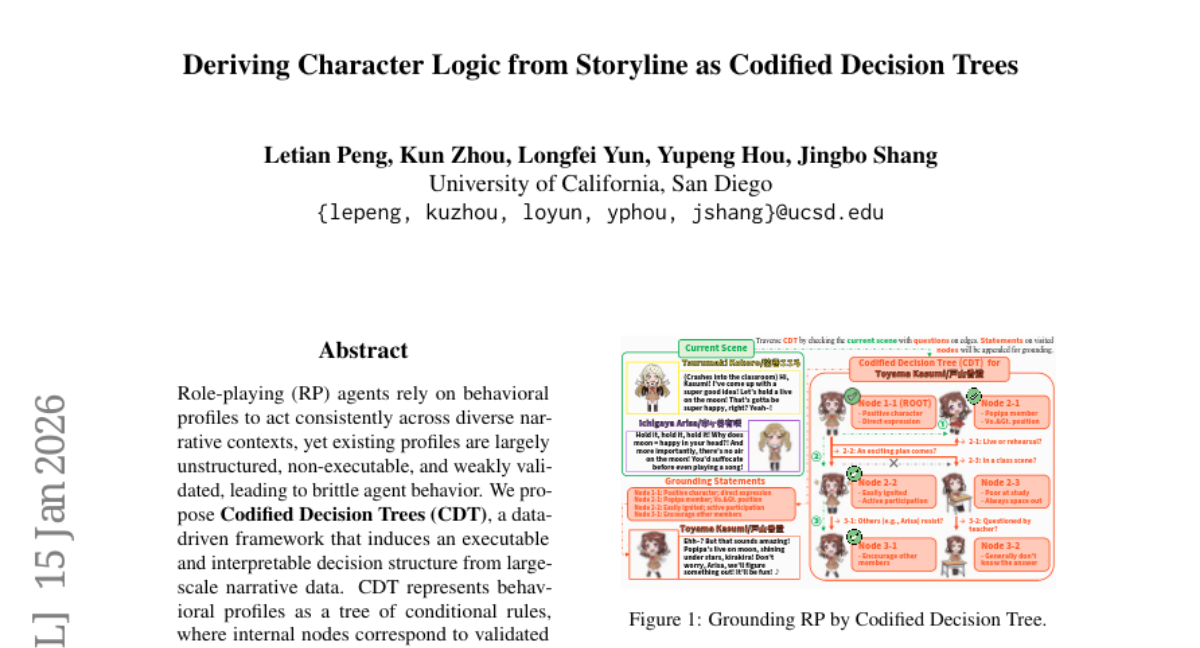
Submitted by KomeijiForce 3 Deriving Character Logic from Storyline as Codified Decision Trees · 5 authors 2
Submitted by haoz19 3 RigMo: Unifying Rig and Motion Learning for Generative Animation Snap Research 2
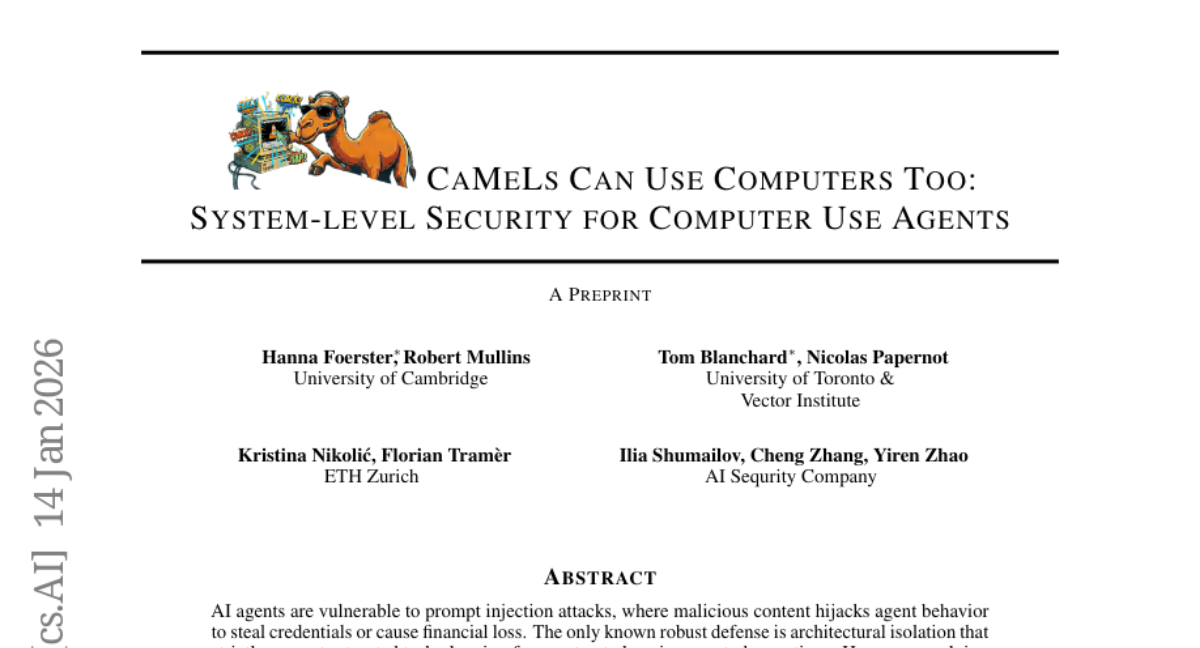
Submitted by iliashum 2 CaMeLs Can Use Computers Too: System-level Security for Computer Use Agents · 9 authors 2
Submitted by Xuweiyi 1 WildRayZer: Self-supervised Large View Synthesis in Dynamic Environments UVA Computer Vision Lab 2
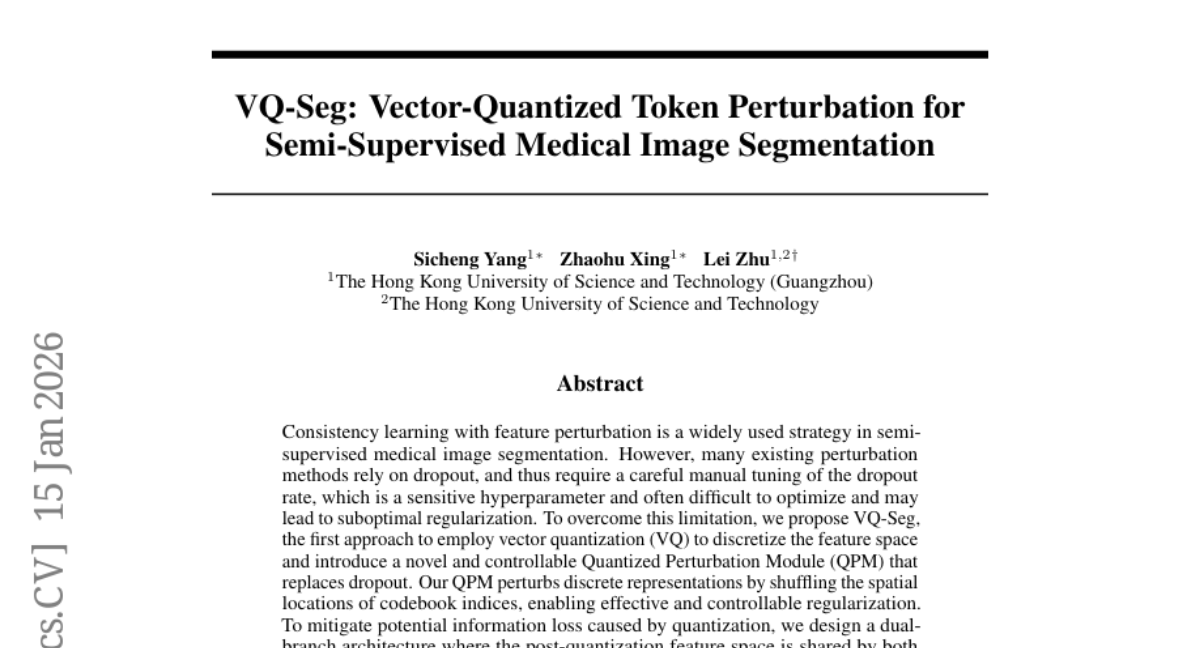
Submitted by yscript 1 VQ-Seg: Vector-Quantized Token Perturbation for Semi-Supervised Medical Image Segmentation · 3 authors 4 2
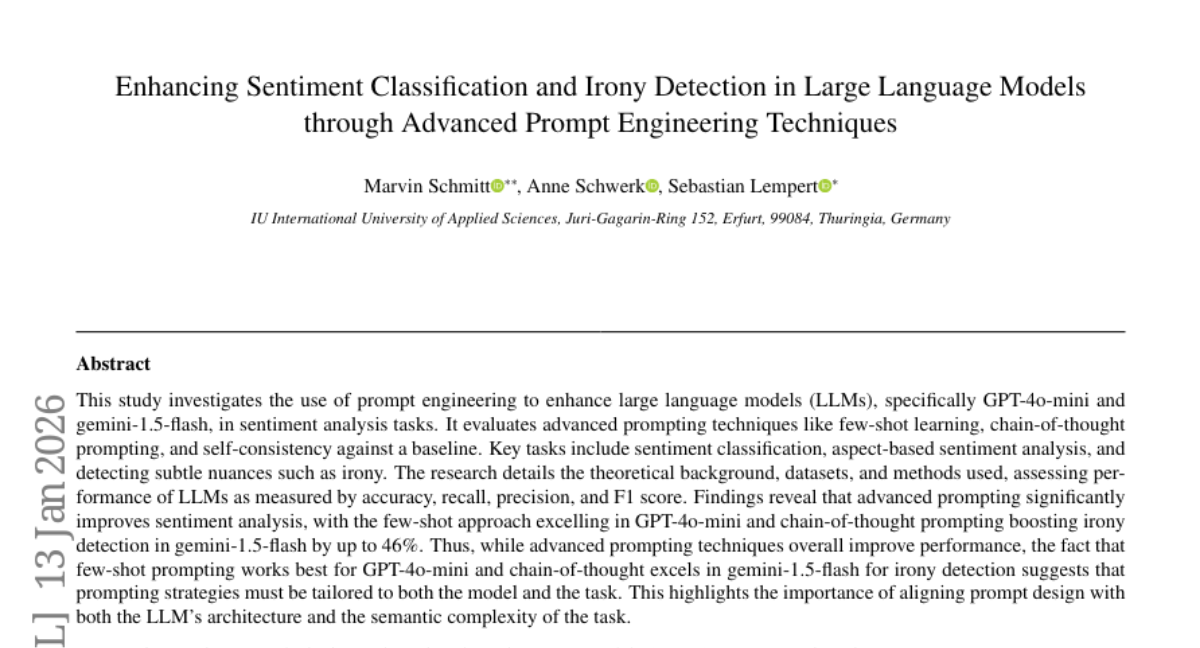
Submitted by slempert 1 Enhancing Sentiment Classification and Irony Detection in Large Language Models through Advanced Prompt Engineering Techniques IU International University 0 2
Submitted by Tomk187 - Memory Bank Compression for Continual Adaptation of Large Language Models · 2 authors 20 2



 xiaochonglinghu